The future is digital: New trends in precision farming
Why follow trends in precision farming
If you don't want to be overtaken by the competition, you need to keep track of where precision farming technology is headed. It is no longer just about navigation and satellite images. The digitization of farms is now a reality, and those who fail to embrace it risk losing their competitiveness and profitability. In this article, we will look at key agricultural innovationsthat bring significant savings in inputs, higher yields, and faster returns on investment.
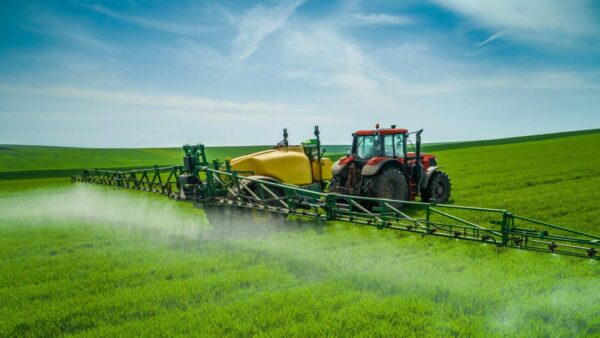
What global trends are driving precision agriculture?
Three main trends dominate the world:
- Digitization of the entire farm management cycle – from crop planning to storage and sales, everything is recorded, evaluated, and optimized.
- Variable application of inputs – especially fertilization and sowing, which allow you to respond to the current needs of crops and soil in order to maximize profits
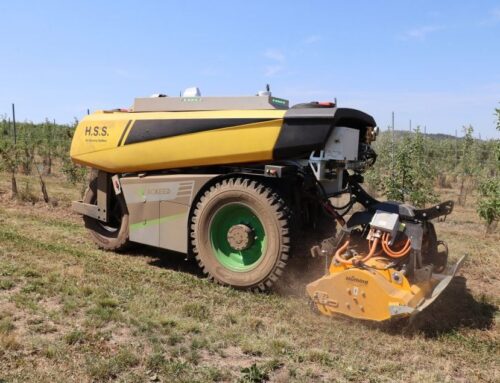
- Automation, machinery, and agricultural systems – machines controlled according to application maps and experiments with autonomous machine control or drones for crop monitoring.
These trends are already being reflected in practice in the Czech Republic and, most importantly, have a direct impact on the economy.
Which innovations bring real economic benefits?
Variable fertilizer application: Less fertilizer, more yield
Variable applications are no longer just a technological novelty; in practice, they deliver measurable economic results, especially in the case of nitrogen fertilizers, whose price currently ranges between CZK 13–18/kg of pure nutrients. Instead of applying an even dose to the entire soil block, you distribute the fertilizer according to the actual needs and potential of the crop.
This allows you to achieve two effects:
- Input savings: If your fields have significant differences in soil fertility, variable application can reduce the total dose by 10–20% without negatively impacting yield.
- Increase in revenue: You're not saving, you're redistributing. You direct nitrogen to where it will really be put to good use. This allows you to increase your harvest by 5–7%without increasing the fertilizer dose.
In addition, you increase the efficiency of nitrogen utilization and prevent fertilizer leaching in areas where plants are unable to utilize higher doses – which is often the case in sandy, erosion-prone, or drought-limited parts of the land.
Variable seeding: Investing in uniform growth and long-term yield stability
Variable seeding allows targeted changes to sowing according to soil properties, water supply, and the yield potential of individual zones. In practice, this means that:
- in areas with higher soil fertility , increase the sowing density, because these areas can support more plants,
- in weaker areas reduce sowing, thereby reducing competition and the risk of uneven ripening.
- At the edges of fields, headlands, or under trees, the dose can be reduced in a controlled manner.
This results in more uniform growth, with fewer empty spaces and overcrowded areas. The result is better crop integration, more stable HTS (thousand seed weight), and easier harvest management.
The economic benefits consist primarily of:
- seed savings (3–10% depending on vegetation and terrain),
- increased yield in responsive zones,
- long-term stabilization of vegetation, which reduces fluctuations between years.
The return depends on the crop, the extent of variability, and the price of seeds.
Digital management of business processes: The end of Excel spreadsheets
Modern systems for managing digital farms, such as Agdata, enable:
- Detailed record of agrotechnical operations – when you have accurate records of agrotechnical interventions, you gain a tool for effective decision-making. In Agdata, you can easily record every operation – from soil preparation, through sowing, fertilization, and spraying, to harvesting. You can assign each intervention to a specific area, crop, worker, and machine. The result is an accurate history of each plot of land, which you can use not only for your own overview.
- Real-time monitoring of input consumption – in real-world operations, it often happens that unplanned waste, erroneous duplicate applications, or inefficient use of supplies. Agdata allows you to monitor the current status of stock, input consumption for each operation, and easily link costs to hectares and kilograms of production. You can obtain this data either automatically via machinesor manually after the operation is completed. The advantage is that the system links everything to the land and crop, giving you a completely accurate overview.
- Connection to sensors, weather stations, and machines – Agdata enables automatic connection to agricultural equipment, GPS tracking including aggregation differentiation, weather stations, and soil probes. By monitoring soil moisture and weather data , you minimize the risk of losing spray effectiveness through washout or poor soil structure during sowing.
All this means better cost control and greater work efficiency.
How do these trends affect Czech farms?
Large enterprises have the greatest potential to take full advantage of precision farming – not only in terms of applying advanced technologies, but mainly in terms of the possibilities of managing production based on real data across the entire area.
Why does a precise approach give a large company a clear competitive advantage?
- You can more easily identify loss-making parcels, ineffective interventions, or low-yield areas that would otherwise be lost in the averages.
- You optimize the use of inputs on a scale where even a 3–5% difference means hundreds of thousands of crowns.
- Unify your record-keeping system across centers, people, and machines—and get your production information under one roof.
- You will increase management oversight of operations, which is essential in complex structures. It's not just about fields, but information from the entire operation.
For example, in nitrogen fertilization, targeted redistribution can bring a 5-7% increase in yield over hundreds of hectares, which means a difference in the range of hundreds of thousands to millions of crowns for a single commodity. By analyzing yield zones and planning doses according to potential, you get the most out of every hectarewithout increasing inputs.
What to expect in the near future?
Artificial intelligence and machine learning
AI already helps analyze satellite images, predict yields, and recommend optimal intervention dates. In the near future, we expect:
- automated recommendations for agrotechnical interventions,
- Yield and return prediction,
- even deeper integration of data from various sources (weather, machines, satellites).
Automated and autonomous machines
In the Czech Republic, autonomous agricultural technology is technologically ready, but legislatively not yet approved for regular unattended operation. There is no legal framework – there is no definition of an autonomous machine, responsibility for operation, or rules for movement on publicly accessible field roads. Autonomous modes can only be used in closed areas or under human supervision.
In European Union countries, including the Czech Republic, there is currently no generally binding legal framework in place that would allow the operation of fully autonomous (unmanned) agricultural machinery on public or accessible roads and field paths. However, the future will undoubtedly belong to them.
Data interoperability and standardization
In the coming years, the farm will transform from a collection of isolated technologies into a a fully connected digital ecosystemin which individual elements communicate automatically—without the need for manual intervention or data rewriting. This transformation will not only be technological, but above all economic. It will enable you to run your business with lower costs, higher efficiency, and without unnecessary losses.
The advantage will be less administrative work and better overview of the farm's finances.
It pays to not only follow trends, but above all to implement them.
Trends in precision farming are not just theoretical concepts; technologies such as variable fertilization, digital farms, and smart machines are already helping you save tens to hundreds of thousands of crowns a year. The key is to to start collecting data through simple digitization, which you can gradually expand.
Want to know how to implement precision farming on your farm?
Contact us at Agdata and we will help you find the most effective path to digitization, from the first sensor to comprehensive data management. An investment that will pay off.