What is precision farming?
Find out what precision farming means and how it can modernize your farm.
What is precision farming and why should we care about it in 2025?
Farming more efficiently, with fewer losses, and responding better to market developments and weather conditions. This is the challenge facing every farmer today, whether they farm ten or ten thousand hectares. Input prices are rising, while market prices remain under pressure. The importance of precision farming has never been more relevant than in 2025.
Precision agriculture is a modern form of farming that uses digital technology, data, and automation to streamline production and reduce waste. This is not science fiction, but an accessible tool for farmers who want to better respond to rising input prices, climate fluctuations, and market pressures. By 2025, precision farming will no longer be a luxury, but a competitive advantage.
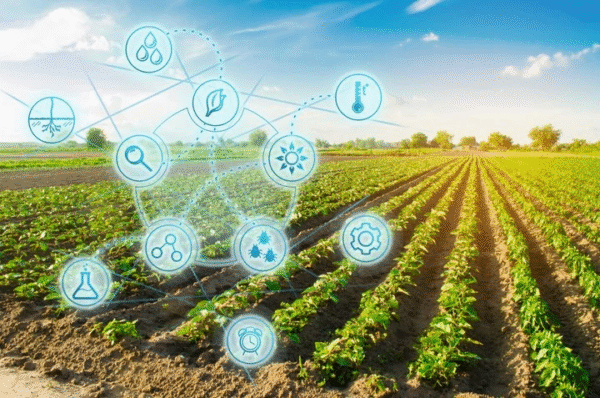
How does precision farming work in practice?
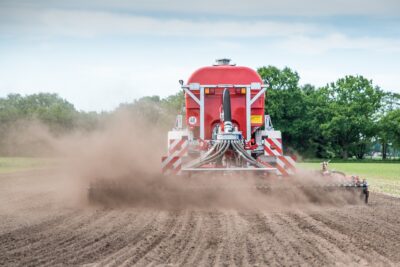
Precision agriculture is a farming method that uses data, technology, and a localized approach to growing crops or raising livestock. The goal is to optimize inputs (e.g., fertilizers, seeds, water, time, labor) with an emphasis on yield, quality, and sustainability.
Precision farming is based on data. It starts with satellite images, soil analyses, drones, and yield history. This data is combined into application maps that determine how much fertilizer, seed, or spray should be applied to a specific part of the field. The result is higher yields, lower costs, and a more sustainable approach to soil management.
Today, systems often communicate across brands. With ISO connect, even older technology can be connected. A digital farm no longer means having to buy new equipment.
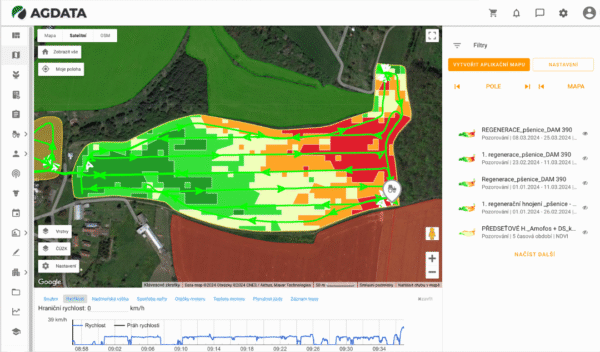
How do variable applications increase efficiency?
In practice, two strategies are most commonly used:
- In homogeneous (evenly distributed) stands, strong areas are supported, thereby increasing yield potential.
- In heterogeneous (uneven) stands, on the other hand, weaker zones are specifically supported in order to even out the stand.
Expected benefits of precision farming:
- Input savings: For example, nitrogen can only be applied where the crop will actually use it. Typical savings are 10–20%.
- Higher yield potential: More balanced stands, better health, fewer losses.
- More accurate decision-making: Data helps you decide where it is worth investing and where it is not.
- Long-term optimization options: Strategic work with sowing plans, nutrition, and crop health.
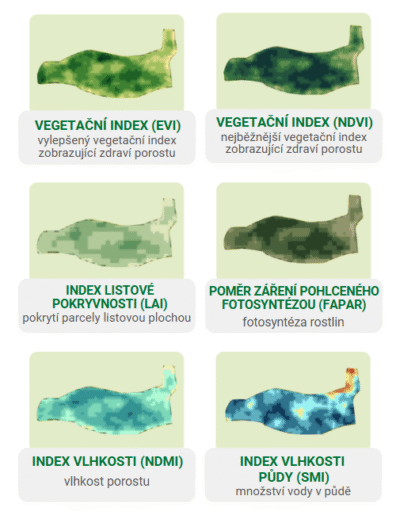
What other benefits does precision farming offer?
Thanks to vegetation indices (NDVI, LAI, NDWI), it is possible to monitor the health of crops, their water saturation, or suspicious areas with pest infestation during the season. This not only improves the accuracy of chemical protection measures, but also the timing of the harvest.
Precision farming contributes significantly to sustainability. It reduces unnecessary fertilizer costs, helps reduce emissions, and improves long-term soil care. It also contributes significantly to efficient water management and reduces soil erosion.
How is it being implemented in practice?
The farm usually starts by collecting data and zoning the land. At an advanced stage, maps of relative yield potential are used, which take into account, for example, relief, valley lines, ridges, travel lines, and the technical capabilities of the machines. The maps are uploaded directly to terminals or via systems such as Agrirouter.
When will I see the results?
The effect can already be observed during the first season. For example, with variable nitrogen application, not only savings can be evaluated, but also improvements in grain quality and crop uniformity. However, the greatest effect will be seen with long-term use and integration with the overall business strategy.
Is it complicated?
Most farmers do not reject technology, but they do not have time to research it. This is one of the reasons why certified advisory centers (such as Advigreen at Agdata) are being set up to help with implementation tailored to specific businesses. Cooperation is important, not one-off purchases.
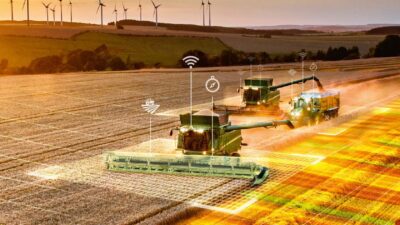
Why start precision farming right now?
Precision farming is not a trend, but a tool for adapting to rapidly changing conditions. It is not about having the most expensive technology, but about the ability to evaluate data and make the right decisions. In 2025, this will not only be a competitive advantage, but often a necessity for sustainable farming.
The investment often pays for itself within the first season, but the greatest benefits are seen in long-term agronomic decision-making.
For whom and when does precision farming make sense?
Precision farming is not just for large enterprises. It makes sense wherever performance, profitability, and responsible land management are monitored. The first benefits are already apparent in the first season – in savings, better decision-making, and stable yields.
Whether you grow wheat, rapeseed, corn, or specific crops, digitization will be an indispensable part of modern agriculture in 2025.
✅ Want to know how to implement precision farming on your farm?
✅ Try the entire system for FREE!
Register for free in the Agdata system