The economics of variable rate fertilization: How much can you really save?
Calculate how smart fertilizer application can improve your farm's results.
Why is it important to control fertilization costs?
Plant nutrition often represents the largest item in the cost structure of an agricultural business. Mineral fertilizer prices are unstable, and their availability often fluctuates hand in hand with their direct price increases. In addition, blanket application often leads to overfertilization of unproductive areas and unnecessary waste. Variable fertilization offers a solution to reduce these costs without negatively impacting yields —and in many cases, it can even increase them.
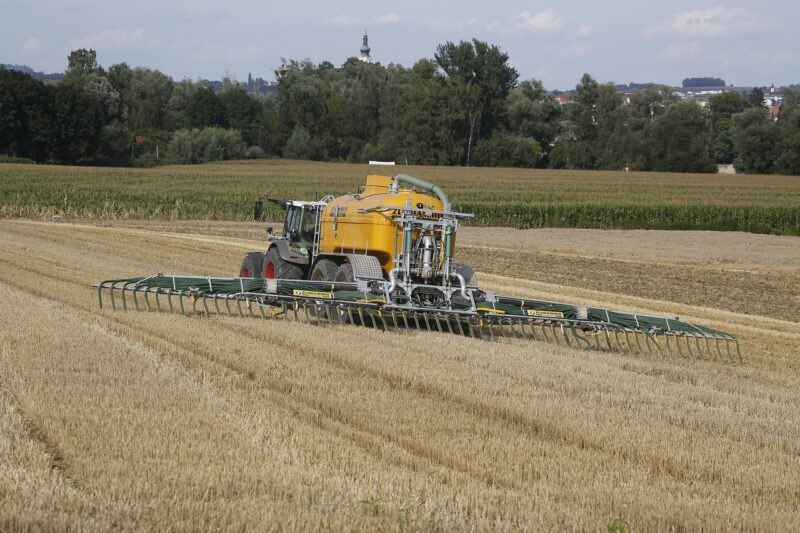
How much does traditional fertilization cost you today?
With standard nitrogen fertilization for winter wheat at 180 kg N/ha and a price of CZK 40/kg of pure nutrient, one application will cost you:
-
7,200 CZK/ha
For 100 hectares, that's CZK 720,000 for nitrogen alone. That doesn't include the application of phosphorus, potassium, or liming.
Experience from farms using variable rate application shows that, for the same area, it is possible to save 10–25% of fertilizer without reducing yield—and sometimes even increasing it.
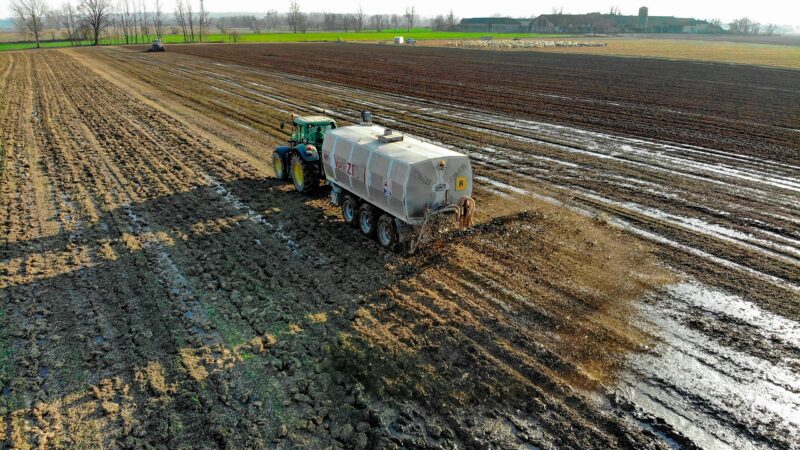
Practical calculation: 100 ha of winter wheat with variable application
| Parameter | Broadcast fertilization | Variable fertilization (-20% N) |
|---|---|---|
| Nitrogen dose | 180 kg/ha | 144 kg/ha |
| Pure nutrient price (CZK/kg) | 40 CZK | 40 CZK |
| Cost per hectare | 7,200 CZK | 5,760 CZK |
| Total costs (100 ha) | CZK 720,000 | CZK 576,000 |
| Savings | – | CZK 144,000 |
And that's just for one nutrient. When other inputs are taken into account, the effect can be even greater.
How much does wheat actually earn you?
To properly assess the effect of variable fertilization, it is necessary to look not only at costs, but also at gross yield per hectare. The average production of winter wheat in Czechia has been around 5.7 t/ha in recent years. At a current market price of around CZK 5,000 per ton (valid for the beginning of 2024), you achieve a gross yield of:
5.7 t × CZK 5,000 = CZK 28,500/ha
For an area of 100 ha, this means CZK 2,850,000. Every percentage point of savings on inputs – especially fertilizers – translates into differences of thousands of crowns per hectare and hundreds of thousands of crowns on a farm-wide scale.
By introducing variable dosing, you can significantly reduce inputs without negatively impacting yield – thereby increasing the margin on every ton of wheat harvested. In practice, this means that variable
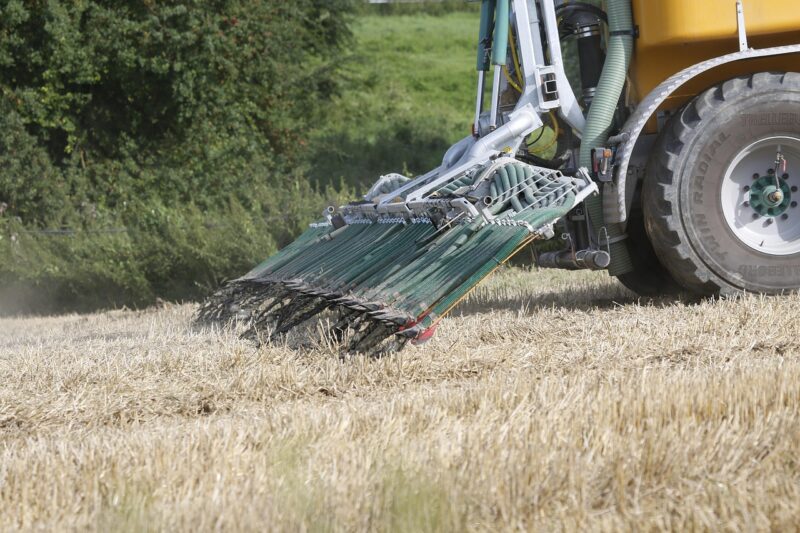
How does variable fertilization contribute to the efficiency of the entire farm?
Variable application is far more than just "dose optimization"—it has an impact on the entire cost and revenue chain:
-
Reducing fertilizer consumption means less handling, storage, and transportation.
-
Less wear and tear on equipment thanks to more accurate route planning and fewer trips.
-
Higher yields in stable zones and lower risk of losses from over-fertilization of weak locations.
-
Option to evaluate return on investment – via yield maps, records, and comparisons.
The result is an increase in profit per hectare – a key indicator given today's uncertainty surrounding purchase prices.
What affects the return on investment in variable fertilization?
The return depends on several factors:
-
Soil and yield variability – take into account differences not only between soil blocks but also between zones
-
Crop type – the effect is more noticeable in crops with higher nitrogen requirements (rapeseed, corn, wheat).
-
Input costs – the more expensive the fertilizer, the greater the savings.
-
Access to data – satellite images, soil analyses, and application records enable better decisions.
-
Connection to existing technology – data transfer and control of technology without the need for replacement vs. the need to purchase new machines.
How to get started: Step by step
If you are considering introducing variable fertilization, we recommend:
-
Map the costs of current fertilization – including the number of applications, dosage, and price of fertilizer.
-
Verify the technical readiness of machines – ISO connect or wireless transmission can be used.
-
Choose a strategy – reserve, corrective, or production fertilization during vegetation.
-
Start with the most important crop on part of the area.
Savings start with data, continue with management
If you really want to save money on fertilization, you need to have an overview. Variable application is neither complicated nor expensive if you use the data you already collect—or can easily obtain. Investing in the right fertilization strategy has a quick return, a measurable impact, and minimal risk when done correctly.
 Want to calculate the return on investment for your farm?
Does variability really work?
Start by registering for free in the Agdata system