Source: https://inodpady.cz/takove-mohou-byt-plody-digitalizace-ceskeho-zemedelstvi/
Farmers, digital primers? Not yet, technology doesn't automatically deliver digital thinking, and thus neither does growth.
Commentary by Lukáš Musil on the survey carried out by the Association of Small and Medium-sized Enterprises and Sole Traders of the Czech Republic(http://amsp.cz/zemedelci-jsou-v-digitalizaci-dale-nez-prumysl/)
15% on fuel consumption, 8% on investments in seed and seedlings, up to 100% loss reduction. Agenda and reporting reduced to 10% - 15% of original time. These are the fruits of the digitization of Czech agriculture, which according to the survey by the Association of Small and Medium-sized Enterprises and Sole Traders of the Czech Republic is on the rise and can be a model for the rest of the industry. There's one problem - it's not entirely true. Despite large investments in new technologies, the average Czech farmer remains far behind the world leader in their actual use. At the same time, it is enough – to want to change this approach, even on the basis of the state's greater orientation on this issue. Otherwise, digitalisation will bring savings and growth to only a small part of householders.
This does not mean that modern technologies are lacking in Czech agriculture. It is historically stated, czechs have always been at the top of the world in agricultural research and development, thanks to the subsidy policy they were able to buy a wide range of modern tools. In the fields we meet tractors equipped with on-board computers, we monitor the gradual onset of robotics and automation. In the Czech Republic only, billions of dollars were invested in this way. But what is still lacking is the essential – digital thinking, and thus the ability to evaluate this investment.
In order to be considered digitised, a field must meet several conditions. First of all, it needs to produce data in digital form in its processes. In the second, to be able to evaluate them and correlate them with each other. A third, so that they can be worked from one central location – that is, that there is a universal digital infrastructure where you can connect pretty much anything with a simple API. The fourth point is the most difficult. It requires the ability to understand the fundamental role of digitalisation, to expand the entire digital ecosystem and to make decisions based on data orientation.
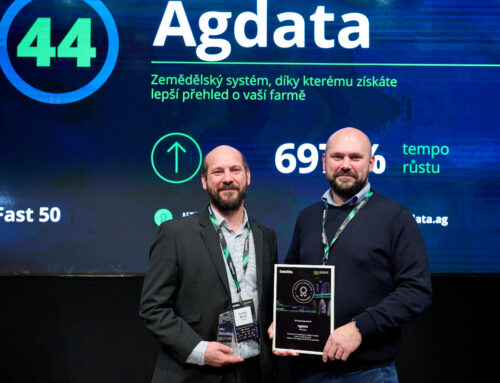
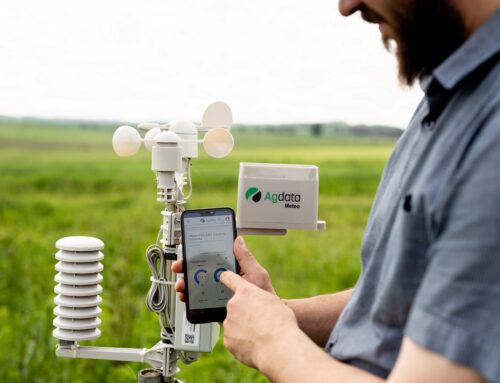
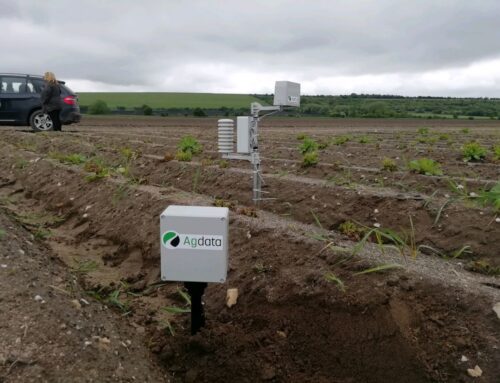
Just to give you an idea of the fruits that digitalization can bring. Agdata, as the largest Czech instrument managing 650,000 hectares, saves farmers on average about 50% of man-hours per month. For small farms, this can mean one wage, for large farms it can mean ten wages. They increase efficiency – 8% on fuel consumption, 15% on other investments. And they speed up the agenda, in case of good setup to a whopping 10% – 15% of the original time. It is therefore not exaggerated to say that the full digitization of Czech agriculture, which is now technically achievable thanks to the expansion of wireless networks for machine and hardware communication, would save hundreds of millions of crowns every year. Not to mention the impact on the landscape.
Research says that 4/5 of farmers use modern technologies. But those with digital minding can only be described as units of percentage. However, there is no need to be pessimistic. The digitisation of Czech agriculture is definitely progressing and the pace will accelerate. However, the main driver will not be positive motivation, but the already mentioned negative. Labour shortages, increasing administrative burdens or climate change, which has a greater impact on agriculture than on other sectors. Those who start addressing these challenges early with digital tools have a good chance of dampening their fundamental impact, the way forward significantly. Others will have to wait until these conditions make digitisation a necessity, not an option.